
Speaker Information
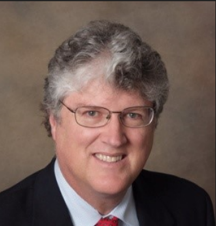
Rich Ruby
Broadcom Co., Ltd.
Abstract
Much has been discussed about the technologies used in rf filters. A technology race has been occurring between Surface and Bulk wave Acoustic devices and that has been remarked upon1. However, there is also the bigger question of what exactly the future for rf filters is.That filters will be needed for the foreseeable future is guaranteed; but will the market be discrete filters or move towards integrated filters in modules - specifically Radio Frequency Front End (RFFE) Modules? I believe the answer will be the latter. The reasons are 3-fold: Size & Performance, cost (yes, at some point modules will be more cost effective when complexity matters) and the advantage of separating expertise between the phone manufacturer and the RFFE manufacturers.
Speaker Biography
Rich started FBAR in 1992/1993 and soon after created the all-silicon microcap FBAR filters for size reduction and quality purposes. Rich has ridden the commercial success of ultra-miniature filters from the early days of flip phones (where size mattered), the exciting days of 'Feature' phones (few rf bands but demanding high performance) and finally to the current Smart phone era (added complexity of carrier aggregation, demand for increased rf power and large filter count).
Since ~2016, he has worked to become self-taught in SAW using generalized resonator technology built up on FBAR. The purpose is to better understand the potential of surface wave technology versus bulk wave devices.
Key Achievements:
- Pioneer of FBAR technology development (1992/1993)
- Creator of all-silicon microcap FBAR filters
- Extensive experience across mobile phone evolution: flip phones, feature phones, and smartphones
- Self-taught expertise in SAW technology using generalized resonator technology
- Holder of multiple patents on FBAR, SAW technology, and RFFE system-level innovations